Baseball Mom On A Budget

Just a mom, supporting two kids playing club ball, documenting all the best deals on gear, strategies for affording club and tournament fees, and tips for staying sane while spending hours driving kids to practices and games.

  • My kids are growing like weeds right now. Seriously, they each have grown an inch in the last 5 weeks and they just. keep. eating.

    And of course, it’s back-to-school season. But beyond that, they are the baseball 24/7, 365 days a year kind of kids, which means that this kind of growth means we need new gear.

    New shoes.
    New batting gloves.
    New sliding shorts.

    And the list goes on….

    Needless to say, this twin growth spurt is putting a strain on our finances. So, here’s how I save a few bucks with every purchase to stretch my dollars as far as I can: I stack my savings. (My strategy may sound too good to be true, but it honestly works! Plus, if you read to the end, I’ve included referral codes that earn you and me even more $$ when you sign up.)

    Many stores offer coupons. The baseball groups are filled with people asking whether there’s a current Dick’s coupon for the weekend, for instance, and those coupon codes can go a long way to help! But I take this a step further. I use rebate sites like Rakuten and Capital One Shopping to get a little (or a lot!!) of cash back on the purchases. And I often don’t use just one: I click through a Rakuten link on a browser with the Capital One Shopping extension set up, so BOTH sites give me credit for the purchase. I recently got 15% back from Capital One along with 8% back from Rakuten on a new backpack for my kid!

    But here’s an essential step that most folks miss: when you shop, activate the rewards from Rakuten and/or Capital One while you add stuff to the cart, but DON’T BUY YET. Wait 24-36 hours, and you’ll often get an email from the sites sweetening the deal. My recent backpack purchase would have given 2% cash back if I purchased right away, but it went up to 15% through Capital One because I waited for the email. At one store recently, I got 25% cash back by waiting for the email!!

    Then, after the purchase, I submit my receipts through sites like Fetch and GasBuddy to rack up even more points that turn into cash. So, one purchase may be reduced by 20% with a store coupon, but then I can get as much as 25-50% in cash back (yes, really!) through either Rakuten or Capital One, then submit the electronic receipts through Fetch, or physical receipts through Fetch and GasBuddy, for another 1-10% in cash after the purchase. Using this strategy, I’ve ended up saving up to 75% off the regular price on items by combining coupons, cash back offers, and reward points.

    And if you’ve read this far, I’ll sweeten the deals for you.

    1. Rakuten: use my referral code (JCGREE75) before 9/30/26 to sign up and make a purchase, and you and I will each get $50! This is how I first signed up long ago and it actually works. Just make sure you click through the Rakuten site or mobile app to make a purchase.
    2. Capital One Shopping: get an $80 bonus — yes, $80! — for you and for me if you sign up using my unique referral link and make a purchase through the browser extension or mobile app within 90 days.
    3. Fetch: use referral code PNNCQC by 8/30/26 to get 2000 points ($2) just for signing up.
    4. GasBuddy: referral code EL3AV4Z gets you an extra $.10 per gallon off a tank of gas when you sign up and use the app to save on gas.

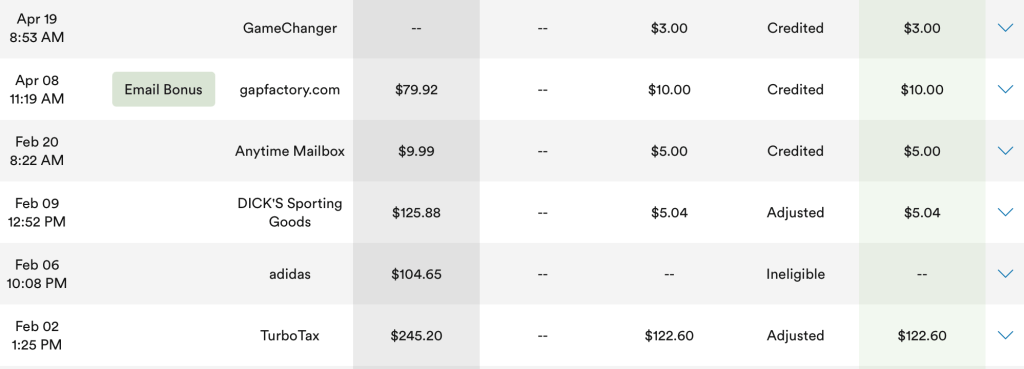
    In case you think I’m making this up, I’m pasting a screen shot of some recent savings I got through Capital One alone. See that $3 for GameChanger? And $5 for buying at Dick’s? All this adds up, even if not all percentages are huge.
    Anyway, I hope this helps someone to save a little extra as you shell out $$ for new school and baseball clothes and gear. We’re all stretched too thin right now. Every dollar really does count, right?
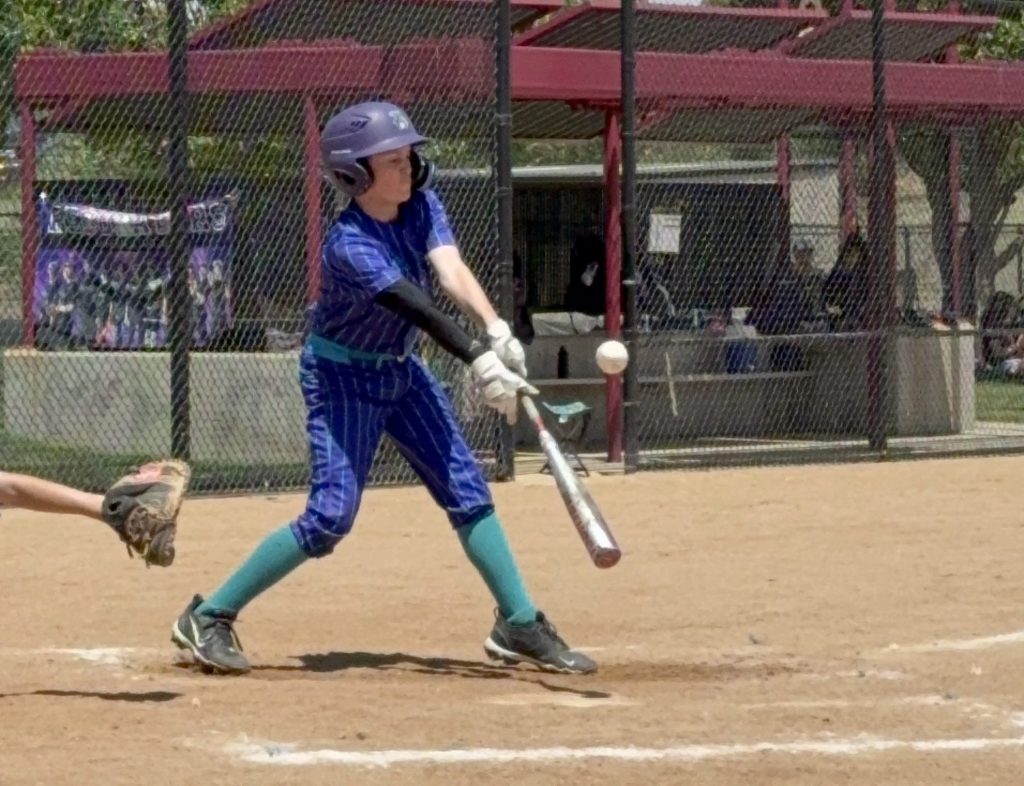
  • At the batting cages last night (because my kids live and breathe baseball 365 days of the year), we met a player and dad who were with the team my son, #7, will be joining next year. Serendipitous! The kid is also friends with someone who will be joining the team my other son, #9, is joining. Baseball is a SMALL world.

    Anyway, the dad and I got into a conversation about the pros and cons of paid coaches versus volunteers, who are most often dads of a kid on the team. Dad coaches get a bad rap, but this parent had a really interesting perspective.

    First, some background: established clubs generally have paid staff who work year-round. They run the indoor clinics, offer 1:1 and group lessons, and staff the facility so players can use the tunnels (for hitting and pitching practice) and weight room year-round. These staff members also run the winter practices and then coach the higher level teams (high school + AAA/majors teams for younger kids). Some clubs also run college-level summer teams, which have paid coaches as well.

    The staff are typically people with playing experience at the college and/or pro level. That’s a key marketing tool: if you can advertise about where a person played you’ve got a great recruiting tool, tapping into the players’ and parents’ dreams of getting college scholarships and even getting drafted by a pro team. It’s so tempting, from the player and parent perspective, and I can tell you that although we have told both our kids the stats about how many high school players make it to college teams and then how many make it to the pros, our kids dream big (and their work ethic around practicing shows us they mean it). So being coached by someone who made it that far is a big draw for them.

    Then there are other teams—every rec league team, little league team, and some or most of the club teams—that are coached by parents. My kids’ first tee ball team was coached by their dad because literally no one else was willing, and he was either a head coach or assistant coach all throughout their rec league experience. Now he’s moved on to high school coaching, and the reasons we decided he shouldn’t coach his own kids may be the topic of another post. Stepping back has been good for him and our boys!

    Anyway, dad coaches get a bad rap and I’ve see first-hand why that is. My own kids’ dad struggled when coaching his own kids because you can’t help but bring all the baggage of your relationship at home. Maybe you got frustrated with them at dinner because they horsed around and almost made you late for practice. It’s tough to filter that out when you get to the field and treat your kids the way you treat every other player. And some dads think their players are the best on the field, whether or not that matches reality, and so their player gets more time on the field or—as I’ve seen quite often—the kid ends up “owning” their preferred position so that no one else gets a chance there.

    Conversely, some dad coaches over-compensate. In trying to avoid being criticized for preferential treatment, their kid ends up sitting on the bench more than others, even when that isn’t reflective of their skill level. The coach my kid, #7, will be joining next year told us that’s his toxic trait as a coach. (We’ll see, I guess.)

    The result is that many parents and players are jockeying for offers with teams that have paid coaches, because the prevailing opinion is that a) those are better teams, and b) those coaches are better coaches.

    But this dad last night said something that really made me think: he said in his experience, the paid coaches are just doing a job, and so they faithfully clock out at the stated time that practice is over and don’t always go above and beyond for the kids. On the other hand, the parents are there because of their own love of the game and because of their kids’ passion, and so they’re often the ones pouring extra time into the team. They may extend practice time, scrounge up teams to scrimmage on non-practice days, and even plan barbecues or other team-building activities. They’re in it not just for the player development, but because they want their kids to have fun.

    I guess we’ll find out this year: #7 will play for a volunteer coach with a player on the team, while #9 is playing for a paid coach who was playing for a D1 school just a few years ago. I’ll report back as it unfolds, but in the meantime, I’d love to hear what your experience has been. Do dad coaches get a bad rap, or is it earned in your opinion?

  • Keeping kids fitted out with gear feels like a full-time job sometimes. My boys are at that stage where they are growing out of shoes quickly and it feels like every day, their pants are a little shorter on them. We went through 3 sets of cleats this past baseball season!!

    Clothes and gear aren’t cheap but there are some items that can be bought used very easily. Practice pants, for example, can often be found in thrift shops or on social media and used pants are great as long as they aren’t torn up in the knees!

    With some used gear, however, you need to be careful. One example: bats.

    Kids outgrow bats in the same way they outgrow clothes. To know if your kid is using the right length, have them hold one end at the center of their chest, with the other end extending out to the end of their outstretched arm. If the bat reaches their fingertips, you’ve got the right length. If they can wrap their hand around the end of the bat—or if the bat isn’t reaching the center of their chest when held at the fingertips, then it’s time for a longer bat.

    Then there’s the weight issue: a “drop 10,” (or -10) is a bat that’s 10 ounces lighter than the length. My kids just outgrew their 29″ -10 bats, and not only did they need a 31″ by the end of the season, but they were looking for something heavier: a -8 for one, and a -5 for the other. Coaches are often helpful in guiding kids to the right weight, but the key is to make sure it’s heavy enough to give them power while not being so heavy that they can’t swing it quickly. And our coach advised using a slightly heavier bat in the winter practice season vs. what they used in games as a way to help build muscle during that preseason training.

    The question, then, is how are we supposed to afford all these different bats??

    This is where smart buyers can sometimes find great deals by looking at used bats on social media sites like Facebook Marketplace and NextDoor, or stores like JustBats.com. Seriously—not only did I find a great deal on a barely used bat at JustBats.com, but I also snagged a new bat on clearance for a tiny fraction of the sticker price. And in both cases, the bat is JUST FINE for off-season training. Once the new season kicks in, we’ll see if these bats are still the right size and then we’ll assess whether it’s time to buy something brand new.

    See, bats have a specific lifespan. You need to get at least 100 hits in to break in a new bat… but as they accumulate hits, they begin to lose their “pop.” I saw one for sale on Marketplace where the seller disclosed that the bat had a rattle, which is a sure sign that the bat is no longer going to give optimal distance on hits. Others I’ve seen have visible cracks, not just in the paint but in the metal. This (in my view) is pretty useless for a kid who is still perfecting their swing and needs to see whether their mechanics are working.

    But not all used bats are at the end of their lifespans. In fact, those 29″ -10s my kids used this season still have life in them—we simply outgrew them! So I’ll be listing them for sale this summer. Maybe a couple younger kids out there who are just getting started with baseball can use a good used bat that was well cared for. And those sales will help fund my kids’ next bat purchases, too.

    If you don’t want to deal with making a sale on your own (I could do a whole rant about the social media marketplaces), you can also take good used bats to local resale events. They are held at retailers like Dick’s and Monkey Sports all the time. You won’t get quite as much for them, but in return you won’t have the hassle of negotiating with individual buyers.

    One last thing: to help with the resale, I recommend giving those bats a thorough cleaning with… NAIL POLISH REMOVER! After much trial and error, I found that this is super effective in removing all the scuffs that balls leave behind. You won’t believe how good the bats can look after a cleaning!

    Anyway, if you’ve had luck selling used bats, or buying them, leave a comment below. I’d love to know what strategies have worked for you!

  • My twin boys have just accepted offers with club baseball teams for the 2027 season. They’ll be in rival clubs, so the shenanigans—and complicated logistics—will be REAL.

    Now, we just have to figure out how to pay for it. And not just the teams… but also the gear.

    Bats.

    Helmets & gloves.

    Cleats & turf shoes.

    And the list goes on….

    I’ll be documenting the journey here, including tips and tricks for how to fundraise, find deals, and know when to invest in name-brands vs. the knock-offs. Follow along, and hopefully we’ll all save money together as we navigate the wild (and expensive) world of youth sports in the US.